Many owners of contaminated properties cannot use their own liability insurance policies to cover remediation obligations because those policies were issued in or after 1985 or 1986 when the “absolute” pollution exclusion came into effect. That exclusion generally bars coverage for environmental cleanup obligations, and it has been held enforceable by the courts. However, although not frequently pursued, often these owners can utilize the policies issued to their predecessors to pay for these expenses. If those policies were issued before 1985 or 1986, the chances are that they contained a narrower pollution exclusion that courts in New Jersey and elsewhere have held to allow coverage.
The majority view holds that a party who has acquired a substantial portion of the assets of a business through an asset purchase may, by operation of law, utilize the liability insurance policies of the seller to address environmental liabilities that were present prior to the sale. Case law in New Jersey is in line with this view. Since the assignee assumes no greater rights in the policy than the original insured, and the only risks covered are those that the insurer would have been liable for if the claim had been made by the original insured anyway, courts have determined that there is no unfair prejudice inflicted on the insurance carrier by allowing such an assignment.
In determining whether a current owner can make a claim for coverage under its seller’s liability policies, the asset purchase agreement should be reviewed as a first step to determine if there was, in fact, an express assignment or other transfer of the right to recover under those policies to the buyer. The existence of such language will strengthen the arguments in favor of coverage and may also mean that the policies were either physically presented to the buyer, or that the name of the carrier, policy year and policy number were listed on a schedule of assets included in the sale documents. However, even if there is no express assignment or other transfer of the policies, there is case law holding that an assignment of the predecessor’s policies can occur by operation of law. By purchasing a substantial portion of the assets of the seller and bearing liability for environmental discharges which occurred prior to the buyer’s ownership, the buyer may still be afforded the benefits of the seller’s liability insurance coverage.
Of course, in the case of a stock sale or merger instead of an asset purchase transaction, there may be no need to have the purchase agreement recite an assignment of the seller’s policies because the purchaser steps in the shoes of the seller and, thus, automatically becomes the insured under the seller’s existing insurance policies.
No matter what kind of transaction results in a transfer of cleanup liability from a seller to a buyer, it is important that buyer’s counsel in negotiating such a transaction make sure that all insurance policies intended to be transferred from the seller to the buyer be properly identified and scheduled in the governing contract, and that complete copies of all liability policies be provided by the seller to the buyer. A complete policy is generally wanted because the “declarations” page, standing alone, would not contain the actual policy language proving entitlement to coverage and also because carriers will often deny coverage, at least initially, without being presented with the full policy.
In sum, in assessing the various options for funding a cleanup, the insurance of the predecessor owner of the property should not be forgotten, and may provide a basis for the payment of remediation costs.
Questions? Let Mitchell know.

Mitchell Kizner is a New Jersey focused attorney in Flaster Greenberg PC’s Litigation and Environmental Law departments. He represents clients in insurance, environmental, construction and other commercial matters as part of his active litigation and commercial law practice. He is also General Counsel to the firm. He can be reached at mitchell.kizner@flastergreenberg.com or 856.382.2247.
 Environmental discharges on commercial property are often discovered or confirmed during the process leading to the potential sale of that property. However, the discovery of that contamination does not have to bankrupt the seller or cause the sale to fall through. In New Jersey, contaminated soil that has been cleaned to less stringent non-residential, or “restricted use,” standards may remain in place on commercial properties as long as the public is protected from exposure to that material. In fact, even contaminated soil that exceeds non-residential standards may be allowed to remain in certain situations. Typically, capping the site with concrete, asphalt or a building footprint is all that is required to protect the public from exposure to the contamination. A cleanup is not really a cleanup.
 Like all businesses, Crowdfunding portals should consider the following “standard” liability coverage:
 If an owner, operator or supplier is alleged to be responsible for the cleanup of a contaminated site and the discharge can be shown to have first occurred before the absolute pollution exclusion went into effect, there may continue to be insurance for the cleanup. Because discharges that cause contamination may have occurred long ago, even though the existen of the pollution may not be noticed or discovered until decades later, and because these policies were “occurrence” based, which means that the coverage applies if the contamination occurred prior to or during the coverage period of the policy, these policies can provide protection even now. The key, however, is being able to prove that the coverage existed and applies to the contamination in question.
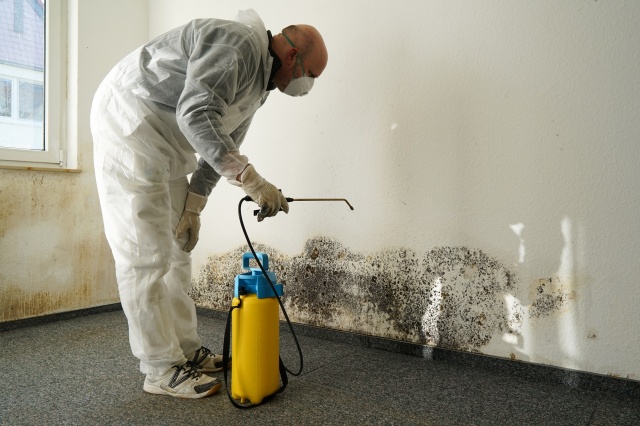 Commercial general liability policies typically exclude injury or damage arising from mold. As a result, insurers often deny coverage whenever an alleged injury is caused in whole, or in part, by mold. Without insurance, the cost of defending the case and paying an ensuing settlement or judgment can be crippling. It is important, therefore, for a close analysis to be made of the allegations made by the claimant before any denial of coverage is accepted by the policyholders.
 New Jersey Environmental Law Blog